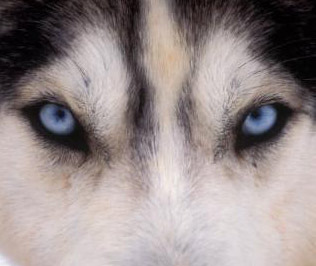
We are finally at the outset of the upheaval
known as the college experience. In the next four years, we will learn, grow,
and change, more rapidly and in drastic measure than in any other time of life.
There is an overarching and ultimate freedom is these four years. Why? Because
we, for the first time, are allowed complete control over the type of person we
develop into. We are among the few whom truly are extended any possible
opportunity we could wish, the few whom have utter control of our future character.
However, though this freedom to choose is a priceless gift, it is also
petrifying in a sense, as it is up to us to take control and choose what to
believe in, and why. This is the true definition of independence, taking control
of what you wish to believe. The question then arises, therefore: how does one
even begin this process? What should one use as an anchor and foundation to the
self, the soul? It seems that in the unique universe of Bump’s World Literature
class, the answer to these questions is the finding of a personal power animal,
from which you learn from and are led by. As such, in my life, I have begun the
process of spiritual exploration and discovery, beginning with the finding of a
silent, watchful gray wolf.
At the outset of
this phenomenal and existential experience, I began this “assignment” (I use
quotes as now it is so much more) with one word- skepticism. We’re going to be
doing what? We’re supposed to do this how? Why exactly? I was the epitome of
what one Jim Carrey movie has affectionately called a “No-Man”1. And
yet, I found myself curious about the process and the validity of it all. My
mind began to open to the meditation and the reality of a power animal during
our first reading on the subject. In animal speak, the author describes a dream
he had in which a long lost animal came to him and stated, “I can not stay
while the heart is closed.”2 This had a significant effect on me, as
I felt as though, for a long time, my heart had been closed to such things,
closed to true feeling and emotion.
So, pushing all
skepticism aside, I sat down at my computer to attempt the meditations. I
imagined all that the guide speaking to me and the readings had advised,
expecting limited returns, but to my surprise, was met by a large, solemn gray
wolf. Rather than presenting himself to me in a way that would indicate a first
encounter, he came from behind me where I sat, nudged my hand in a familiar yet
somehow serious way, and simply sat, staring in the same direction in which I
had been focusing my attention, as if he had no idea that he was who I had been
looking for. He seemed to say “what are we waiting on?” not as a new friend,
but as a lifelong companion that had simply been waiting patiently to be noticed.
As he knew, it had to be on my own terms. In preparation for this assignment, I
watched a documentary called Living with Wolves, in which a man named Jim spent
6 years among a pack of wolves to research their social habits. In this
documentary, Jim stated that “any communication or affection with wolves must
be on their own terms, or it isn’t as real or rewarding for either party.”3
Although at this point I hadn’t known this about wolves, my wolf surely
had understood this about me. After this
first breakthrough with meditation and self-awareness, I was completely
speechless. I couldn’t help but frequent the spot a few more times, until not
only was I seeing the wolf through my own eyes, the wolf as companion, but
through the eyes of the wolf himself.

I looked up at
the thickly falling snow, which smelled of new and clean, and filled me with
warmth, not of body, but of mind. Snow meant Easy-kill, snow meant camouflage,
and snow meant elk or deer. As I sat upon the ridge overlooking Wolf-camp,
which stretched below me in forest-trees and grassy-plain all the way to River,
watching snow-fall and eagle-soar, my brother Swift-paw, loped up assuredly to
sit down at my side. He watched the yearlings below in Wolf-camp at their play,
as I had been doing. He seemed to watch with both contempt and fierce pride. He
was Alpha, and as such carried the responsibility of Blood-pack on his own.
Although he knew that the yearlings must quickly grow in order to survive
Snow-fall for the Long-dark soon to come, they were still his Blood-kin, and part
of Pack. Although Swift-Paw was my brother, we were as different as Sun and
Moon. I was Beta, second in command, and carried the role as well of
Peace-maker within Blood-pack. Where he was loud and daring, giving him the
name Enapay4, I was calm and silent, ever listening, which gave me
name of Wise-wolf, Rafe5.
It had been a
hard year for Blood-pack. Elk and deer had migrated south shortly after the
birth of the year’s pups, leaving us without food for them unless we followed.
We ran with them. The yearlings, at the time pups, had been struggling to keep
up, but we were Blood-pack, and would not leave them behind. So we had
struggled on, finally creating a new Wolf-camp, and waiting for the pups to
grow. They were finally ready for Hunt of elk and deer, and the Snow-fall had
seemed to see them, and rejoiced as they did on their first day of Hunt by
giving herself to us that we may have Easy-kill. As we watched the yearlings, the rest of
Blood-pack came up to meet them, now fifteen in all with the new yearlings, a
good number. I felt Enapay leave my side and make his way down, and I followed,
though careful never to step in front of him.
Once we had reached the bottom of Great-rock and met the rest of the
pack, Enapay sniffed for a moment, then immediately set off West. The rest
followed in single file, by order of rank, with occasional fighting over who
led whom, which I would finish.
We soon reached
a clearing, where a small Blood-pack of deer were feeding on ground-grass.
Taking time to shove the new yearlings into formation, I then took my place
beside Enapay as he spotted a hurt deep pup on the edge of the herd. Enapay
growled, one long, blood-chill growl that I knew well, and ran out of
forest-trees after the deer, the rest running after him, snapping and barking
as they ran. The deer soon heard and ran, but hurt deer could not run long, and
we took her down soon. However, Enapay did not stop there, but ran off in
search of large deer, one close by whom he smelled that must be Mother of the
deer we had killed. We quickly overtook her, converging in unison to take her
down, as she was still larger than even Enapay and I. We had found Easy-kill,
and rejoiced in the fresh-meat. Enapay began to howl, I soon following suit,
and the rest of Blood-pack after. Enapay ate first, and soon we had all eaten
our fill, happy for Snow-fall and for Easy-kill and for Blood-pack.

As I soon found
out, the gray wolf whom was now my power animal was Rafe, Wise-wolf, silent,
steadfast, loyal, the peacemaker. There is so much that I have already learned
from Rafe: what I feel connect with him on, and what I hope to emulate about
him in the future. I have stated at previous instances in the class that I have
always been one to wish to break free, and that it can at times push away the
people that I care for. I was surprised, as such, to learn that the animal
which I had spiritually connected with the most was one of the most loyal,
family oriented creatures in the animal world. “Some canids, especially wolves,
form packs, which allow them to capture species much larger than themselves.”6
The gray wolf possesses a fierce loyalty to his pack, one that is hardly
ever broken, and that transcends that of pack rank. Even the Omega, whom is the
lowest member of the pack, is a valued member of the family and never to be
left behind under any circumstances. It is not simply that I wish to
possess this trait in a similar fashion, but that I have discovered, through
this research and exploration, that I do already share this value for family
and for loved ones. Although I hope to meet new people, to travel, and to
experience life as fully as possible, I could never permanently leave behind
those that I love. This innate understanding that were are stronger as a unit
than separately is something wolves and humans both rely upon, as we should,
and Rafe is teaching me that it is okay to have this need.
I also currently
am an individual who seems never to allow himself to decide on his own what is
best. I toss and turn perpetually over every small decision, seeking advice and
approval from others for my choices. Yet wolves, especially Rafe, seem to
innately grasp what they want and why they want them. This ability to live in
the now, and to not think of tomorrow or how difficult a decision may be, is
something in Rafe that I hope to emulate. I want to create for myself a core of
values and beliefs that I can live by without doubt, knowing that “this is who
I am, and this is what I want”.
Another traits
which wolves possess is an incredible adaptability to their environments.
Although in recent years they have lived in North America in almost exclusively
northern, wintery seclusion in the mountains, they were once known to live
throughout every climate in the United States.7 They do what they must
to survive, and very quickly. This is an ability that humans have in large
measure, but one that emotionally we are not usually open to. People as a
general do not like change, and therefore avoid it when in reality it can be an
extremely fulfilling experience, can aid in rediscovery of the true self. I am
no exception to this rule. I feel that I am better than most at dealing with
change, yet still at times am unwilling to uproot myself from the familiar,
even when I see that it will be beneficial for me. But a wolf adapts when he
must, and so shall I.
Finally, the
most important trait I have found in Rafe, his defining quality, and what sets
him apart from even other wolves, is his quiet strength. Rafe feels like a
natural leader: he is thoughtful, calm, cautious, and fierce when he must be.
Yet even accompanied by these qualities, Rafe is a Beta. He seems to understand
that there are times to act, and then times that you must not act. He leads by example of character, becoming the caretaker
of others, a naturally compassionate and empathetic being whom loves all of his
pack equally, including the Alpha, whom he knows is right for said position.
Rafe is truly of calm mind and centered spirit, knowing and finding contentment
in where he belongs, and feels no need for others to recognize this, even
myself, whom he has watched all along and waited patiently for my arrival. I
wish to be like Rafe: to have my feet (paws) set firmly upon the ground, my
foundation of spirit and body. If I can emulate these qualities, then I feel
that in life I will not only succeed, but be content.
The
gray wolf Rafe, my spirit animal, is calm, fiercely loyal, grounded, adaptable,
self-assured, and at times even ferocious. The qualities that he possesses have
helped me to discover in myself the traits that we share and that I wish to
emulate, who I am currently and who I want to be. I have a long way to go, and
it may not be comfortable or easy, but hope to one day fell the same
self-assured peace of mind and spirit that he seems to know.
WORD
COUNT: 2074
WITHOUT QUOTES: 2025
2. Ted
Andrews, "Awakening to your Spirit Totems," Composition and World
Literaure, ed. Jerome Bump (Austin: Jenn's Copy and Binding, 2013), 121.
6. Ann
Mallard, Creatures of the Wild: Wolf, (London: PRC Publishing Ltd., 1998), 4.
7. Ibid.,
10
Image Citations: